Fish oil for athletes:
applications in sports nutrition
Why this lecture
What you'll learn
Practical questions we explore
How much fish oil do I actually need, and why does my capsule say 1000 mg?
Should I take fish oil to build muscle, and does it still have a benefit if my protein intake is already right?
Which claims are actually allowed on products, and why does it depend on which country I'm in?
If inflammation drives adaptation, am I blunting my training by suppressing it?
Where did the 8% target come from?
Should I take fish oil the whole time I'm injured, or stop at some point?
Does fish oil improve VO2 max?
My soreness is better, but my performance isn't. What's going on?
Can fish oil really protect against concussion?
What users say about our webinars
You always have such a diverse range of speakers from all over the world that provides such a rounded, unbiased view of a subject. Thank you
GK
Always well done! Thank you for organizing and keeping these learnings going.
CK
My first and will not be my last live webinar to attend... Spectacular as always Prof. Asker. Thank you!
MH
What's included?
Fish oil for athletes
Live webinar
2 hours of expert context across 3 talks with practical advice.
Expert speakers
Dr. Oliver Witard with Prof. Asker Jeukendrup as host.
Bonus content
Access to recording + bonus resources such as further reading material after the webinar.
Q&A session
Learn by asking your questions live to the speakers during the Q&A session.
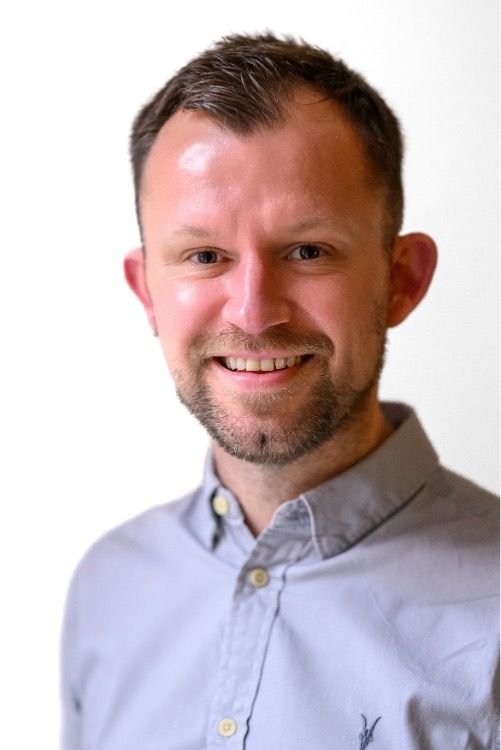
Dr. Oliver Witard
Oliver is a Reader in Nutrition and Exercise Metabolism in the Faculty of Life Sciences and Medicine at King’s College London and Deputy Lead of the undergraduate programme in Sport and Exercise Medical Sciences. Oliver’s research interests are focussed on protein nutrition for maximising muscle adaptation to exercise training. His publications focus on establishing the optimal dose, source and timing of dietary protein for muscle recovery and performance in athletes. He has extensive expertise in stable isotopic tracer methodology for measuring in vivo muscle protein turnover in humans, and also applies these techniques to older adult populations with application to healthy ageing. Oliver has published over 80 journal articles and has delivered invited talks at international symposiums and industry events, including International Sport and Exercise Nutrition Conference (ISENC), the inaugural FC Barcelona hosted Congress in Sport Nutrition, ACSM, and The European Nutrition Society congress.
Your access options...
Pay once
£25
Watch the webinar live and receive unlimited access to the webinar recordings. You will also have access to transcripts, wider reading, MCQs, summary notes, and speaker handouts.
-
Ask questions live
-
Unlimited access to recordings
-
Access all live webinar content
Premium monthly
£15/month
Unlimited access to ALL lectures, courses, and live webinars on mysportscience academy. Watch +60 lectures from world leading experts, and access future live webinars and all webinar content.
-
Unlimited access to all content
-
Access to all live webinar content
-
Flexible subscription
-
Download certificate upon completion
Premium annual
£150/year (save £30!)
Unlimited access to ALL lectures, courses, and live webinars on mysportscience academy. Watch +60 lectures from world leading experts, and access future live webinars and all webinar content.
-
Save £30 vs. monthly
-
Unlimited access to all content
-
Access to all live webinar content
Frequently asked questions
How can I watch the live webinar?
There are two ways to watch the live webinar: 1). Purchase the webinar, or 2). Subscribe to mysportscience academy premium or basic.
Can I access the recordings after?
All lectures will be uploaded to this page for you to watch after the live webinar.
Will there be an opportunity to ask questions?
Yes. We aim to have at least 15 minutes after all talks for a Q&A, and use Menti.com to collect your questions during the webinar.
How do I join the webinar live?
After registering or subscribing, you will be sent an access link via email 24 hours before the webinar starts (check you junk/spam box).
Will there be handouts available afterwards?
There will be a host of learning material provided after the webinar. These include a lecture recording, transcript, speaker notes, MCQs, wider reading, and handouts (if shared by the speaker).