
Football nutrition: what empties, what refills, and what actually limits a player
Why this webinar
What you'll learn
Practical questions we will explore
What does a top-class player actually do in a match, and how does that differ between men and women?
Which muscle fibre types deplete first, and does the pattern depend on the preceding activity profile?
What is the time course of muscle glycogen restoration after a football match?
Why does output fall in the five minutes following a player's most intense passage of play?
What does extra time add, on top of ninety minutes that has already reduced glycogen substantially?
What is the relationship between glycogen concentration and performance in football?
Does carbohydrate ingested during a football match spare muscle glycogen?
How much carbohydrate is required between football matches, and how soon must it begin?
Once carbohydrate intake is adequate, do caffeine, sodium bicarbonate or nitrate play a role?
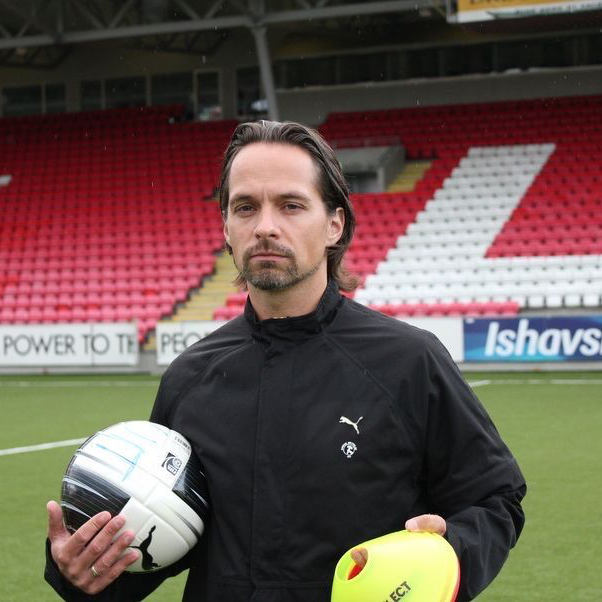
Prof. Magni Mohr
Prof. Magni Mohr's match-analysis work established the description of fatigue in football that the field still works from, distinguishing temporary fatigue following intense passages of play, reduced performance at the start of the second half, and end-of-match fatigue, and attributing each to a different mechanism. His biopsy studies quantified the metabolic cost of match play in men and in women, including extended time, and his applied work covers congested fixture schedules, post-match recovery time courses, thermal strain and the interventions used between matches.
Dr. Jeppe Vigh-Larsen
Dr Jeppe Vigh-Larsen quantifies glycogen by transmission electron microscopy at the level of the individual muscle fibre and of the intramyofibrillar, intermyofibrillar and subsarcolemmal compartments, and relates those measurements to sarcoplasmic reticulum calcium handling, sodium-potassium pump activity and repeated-sprint performance in the same participants. His work includes controlled manipulations of pre-exercise glycogen availability and of carbohydrate intake during intermittent exercise.

What users say about our webinars
You always have such a diverse range of speakers from all over the world that provides such a rounded, unbiased view of a subject. Thank you
GK
Always well done! Thank you for organizing and keeping these learnings going.
CK
My first and will not be my last live webinar to attend... Spectacular as always Prof. Asker. Thank you!
MH
What's included?
Football nutrition: what empties, what refills, and what actually limits a player
Live webinar
2 hours of expert context across 3 talks with practical advice.
Expert speakers
Prof. Magni Mohr and Dr. Jeppe Vigh-Larsen, with Prof. Asker Jeukendrup as host.
Bonus content
Access to recording + bonus resources such as further reading material after the webinar.
Q&A session
Learn by asking your questions live to the speakers during the Q&A session.
Your access options...
Pay once
£25
Watch the webinar live and receive unlimited access to the webinar recordings. You will also have access to transcripts, wider reading, MCQs, summary notes, and speaker handouts.
-
Ask questions live
-
Unlimited access to recordings
-
Access all live webinar content
Premium monthly
£15/month
Unlimited access to ALL lectures, courses, and live webinars on mysportscience academy. Watch +60 lectures from world leading experts, and access future live webinars and all webinar content.
-
Unlimited access to all content
-
Access to all live webinar content
-
Flexible subscription
-
Download certificate upon completion
Premium annual
£150/year (save £30!)
Unlimited access to ALL lectures, courses, and live webinars on mysportscience academy. Watch +60 lectures from world leading experts, and access future live webinars and all webinar content.
-
Save £30 vs. monthly
-
Unlimited access to all content
-
Access to all live webinar content
Frequently asked questions
How can I watch the live webinar?
There are two ways to watch the live webinar: 1). Purchase the webinar, or 2). Subscribe to mysportscience academy premium or basic.
Can I access the recordings after?
All lectures will be uploaded to this page for you to watch after the live webinar.
Will there be an opportunity to ask questions?
Yes. We aim to have at least 15 minutes after all talks for a Q&A, and use Menti.com to collect your questions during the webinar.
How do I join the webinar live?
After registering or subscribing, you will be sent an access link via email 24 hours before the webinar starts (check you junk/spam box).
Will there be handouts available afterwards?
There will be a host of learning material provided after the webinar. These include a lecture recording, transcript, speaker notes, MCQs, wider reading, and handouts (if shared by the speaker).