Recovery for athletes: what works, what doesn't, and what may harm
Why this webinar
What you'll learn
Practical questions we will explore
How quickly does each part of recovery really happen: fluid, muscle glycogen, liver glycogen, protein?
Does a bigger, faster rise in blood amino acids mean a bigger muscle response?
What does cold-water immersion do to muscle protein synthesis after a single session?
What happens to liver glycogen overnight, and what does that mean for training in the morning?
If you eat 10g of carbohydrate per kg body mass, how much of your muscle glycogen is back after 12 hours? ?
Are free amino acids and BCAAs a shortcut to improve muscle recovery?
Does collagen do anything for muscle or for the connective tissue inside it?
Does the increased blood flow with heating, improve recovery?
Is there a session after which you should not get into cold water at all?
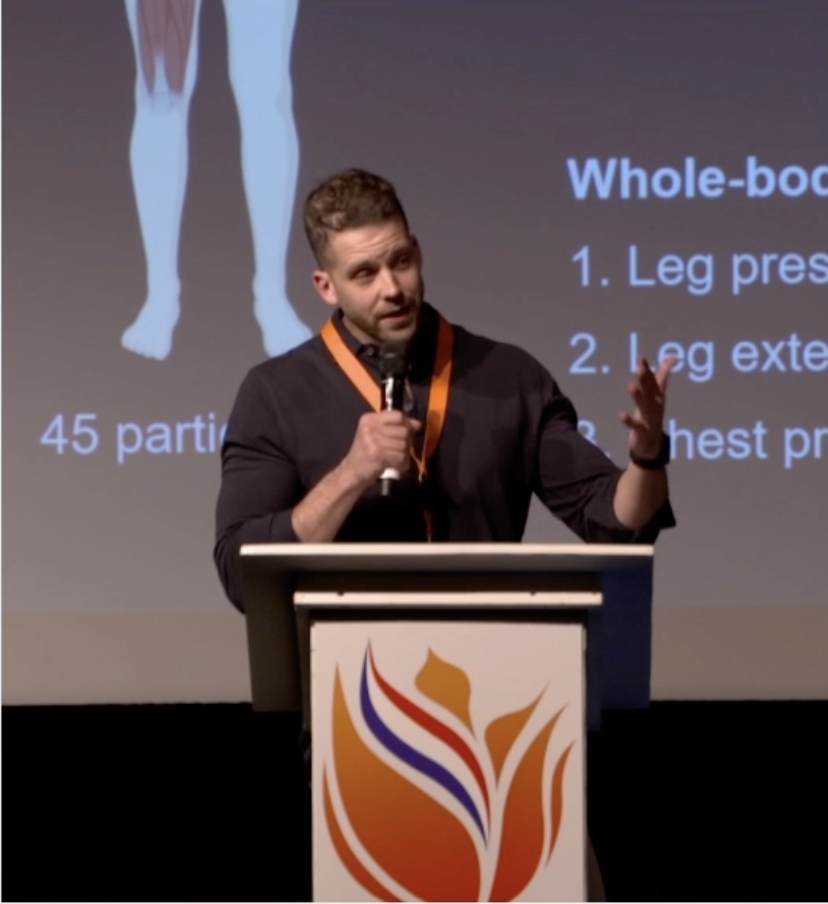
Dr. Cas Fuchs
Dr Cas Fuchs is a researcher at Maastricht University (NUTRIM School of Nutrition and Translational Research in Metabolism), where he works on carbohydrate and protein metabolism, glycogen storage, muscle loss during disuse, and the effects of temperature on recovery and adaptation. He has published around 40 papers, including most of the small body of work in which liver glycogen has been measured directly in athletes using carbon-13 magnetic resonance spectroscopy, and the studies that first showed post-exercise cooling lowers muscle protein synthesis rates. His work appears in The Journal of Physiology, the American Journal of Clinical Nutrition, the American Journal of Physiology, the Journal of Nutrition, Medicine & Science in Sports & Exercise and the Journal of Applied Physiology.
What users say about our webinars
You always have such a diverse range of speakers from all over the world that provides such a rounded, unbiased view of a subject. Thank you
GK
Always well done! Thank you for organizing and keeping these learnings going.
CK
My first and will not be my last live webinar to attend... Spectacular as always Prof. Asker. Thank you!
MH
What's included?
Recovery for athletes: what works, what doesn't, and what may harm
Live webinar
2 hours of expert context across 3 talks with practical advice.
Expert speakers
Dr. Cas Fuchs with Prof. Asker Jeukendrup as host.
Bonus content
Access to recording + bonus resources such as further reading material after the webinar.
Q&A session
Learn by asking your questions live to the speakers during the Q&A session.
Your access options...
Pay once
£25
Watch the webinar live and receive unlimited access to the webinar recordings. You will also have access to transcripts, wider reading, MCQs, summary notes, and speaker handouts.
-
Ask questions live
-
Unlimited access to recordings
-
Access all live webinar content
Premium monthly
£15/month
Unlimited access to ALL lectures, courses, and live webinars on mysportscience academy. Watch +60 lectures from world leading experts, and access future live webinars and all webinar content.
-
Unlimited access to all content
-
Access to all live webinar content
-
Flexible subscription
-
Download certificate upon completion
Premium annual
£150/year (save £30!)
Unlimited access to ALL lectures, courses, and live webinars on mysportscience academy. Watch +60 lectures from world leading experts, and access future live webinars and all webinar content.
-
Save £30 vs. monthly
-
Unlimited access to all content
-
Access to all live webinar content
Frequently asked questions
How can I watch the live webinar?
There are two ways to watch the live webinar: 1). Purchase the webinar, or 2). Subscribe to mysportscience academy premium or basic.
Can I access the recordings after?
All lectures will be uploaded to this page for you to watch after the live webinar.
Will there be an opportunity to ask questions?
Yes. We aim to have at least 15 minutes after all talks for a Q&A, and use Menti.com to collect your questions during the webinar.
How do I join the webinar live?
After registering or subscribing, you will be sent an access link via email 24 hours before the webinar starts (check you junk/spam box).
Will there be handouts available afterwards?
There will be a host of learning material provided after the webinar. These include a lecture recording, transcript, speaker notes, MCQs, wider reading, and handouts (if shared by the speaker).